Study Links Workout Variety, Intensity to Lower Depression Odds
08/02/2026 / By Petra Stone

A study of nearly 39,000 adults found that people who varied their workouts and included higher-intensity exercise had lower odds of depressive symptoms, according to findings released July 30.
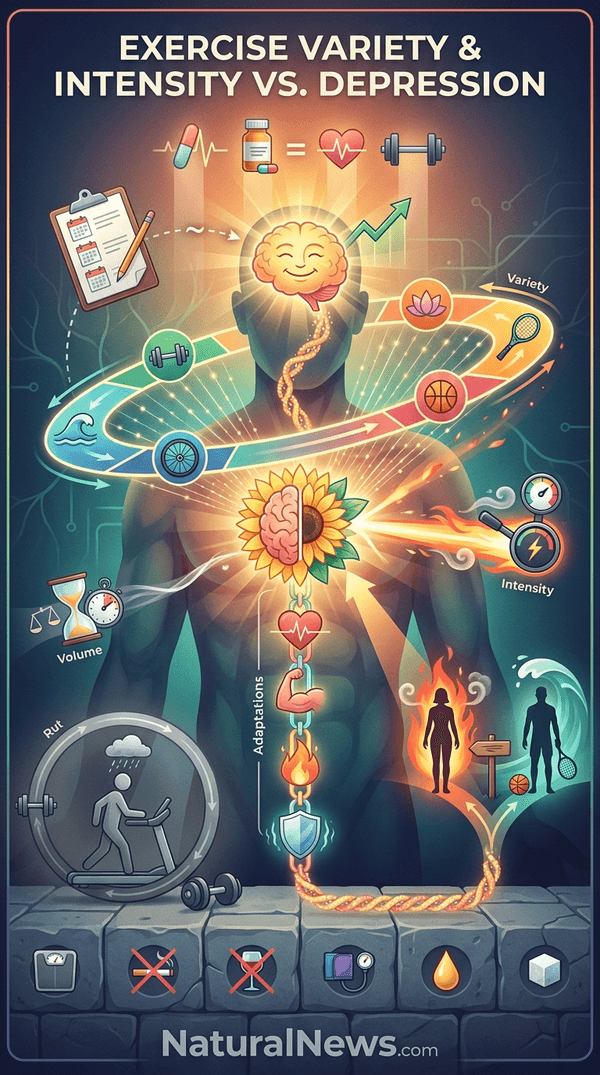
Researchers analyzed exercise volume, intensity, type, and diversity over a three-month period and accounted for factors including age, body weight, smoking, alcohol intake, blood pressure, cholesterol, and blood sugar, according to the report. The report stated that exercise diversity and intensity were more strongly associated with mood than total exercise volume alone.
Study Design and Measurements
Adults in the study completed a depression screening questionnaire and reported the types of physical activity they had performed in the previous three months, according to researchers. Rather than looking only at whether participants met exercise guidelines, the research team separated physical activity into total amount, workout intensity, exercise categories, and weekly routine variety.
Exercise diversity reflected how participants spread movement across different forms, not simply how many activities they tried occasionally, the report stated. The study accounted for factors known to influence depression risk, including age, body weight, smoking, alcohol intake, blood pressure, cholesterol, and blood sugar. Because the study relied on self-reported exercise and depression measures, the results describe associations rather than proof of cause and effect, the report noted.
Key Findings: Variety and Intensity Over Volume
People who exercised more generally had lower odds of depressive symptoms, researchers said. Once researchers looked at all of the exercise characteristics together, two factors rose to the top: diversity and intensity.
Participants who spread their movement across multiple activities and included higher-intensity exercise appeared to have the lowest odds of reporting depressive symptoms, according to the study. These characteristics were more strongly associated with mood than total exercise volume alone, the report stated.
“It’s not just about how much you exercise, but how you vary it,” officials said. A separate analysis of nearly 80,000 participants found that aerobic exercise reduces symptoms of depression with an effect size comparable to antidepressant medications, according to researchers at James Cook University [1]. Earlier findings have reported that resistance training can relieve depressive symptoms [2], and researchers have examined the biological basis of exercise’s mood-lifting effects [3].
Sex Differences in Exercise Associations
Researchers reported that vigorous exercise showed a particularly strong association with lower depressive symptoms among women. For men, aerobic exercise and mixed-endurance activities, such as circuit training, basketball, and racket sports, showed the strongest associations, the report stated.
The study authors said the sex-specific differences may warrant further investigation. Previous research has documented that the benefits of regular physical activity extend beyond physical health to mental health [4].
Context and Takeaways
The findings do not suggest that people need to spend more time exercising; rather, they may benefit from exercising differently, according to the study. A varied week could include strength training, brisk walks, pickleball, cycling, and interval workouts, the report noted.
Exercise diversity can also be compared with dietary variety, researchers said. Just as eating a wide range of foods provides a broader range of nutrients, moving in different ways may challenge the body and brain differently, according to the report.
Researchers said the observational design means the study cannot prove causation and relied on self-reported exercise and depression measures. The findings align with earlier research showing that regularly engaging in multiple types of physical activity, rather than only increasing exercise volume, may reduce mortality risk [5]. Broader analyses have also described exercise as an important component in depression treatment [6], and World Health Organization guidelines call for a combination of aerobic and muscle-strengthening activity each week [7].
References
- NaturalNews.com. “The Good Stress That Rewires Your Brain: How Exercise Builds Mental Resilience”. NaturalNews.com. July 29, 2026.
- Mercola.com. “Strength Training Can Relieve Depression”. Mercola.com. June 1, 2018.
- Mercola.com. “The Science Behind Exercise’s Mood-Lifting Effects”. Mercola.com. August 22, 2019.
- “Role of Physical Exercise in Preventing Disease and Improving the Quality of Life”.
- Coco Somers. “Study: Variety in Physical Activity Linked to Lower Mortality Risk”. NaturalNews.com. April 30, 2026.
- Mercola.com. “Millions Led Astray by These Pills No Better”. Mercola.com. June 20, 2019.
- “Exercise”.
Explainer Infographic
Submit a correction >>
Tagged Under:
Censored Science, exercise, fitness, fitness routines, health science, healthy lifestyle, hydration, intensity exercise, Men's Fitness, natural health, Naturopathy, remedies, research, variation, varied movements, Women's Fitness, workouts
This article may contain statements that reflect the opinion of the author
RECENT NEWS & ARTICLES